Casino AI Surveillance for Table Games: How it Works
Billy F.
What it is, in one line: EagleSight Table Games Surveillance is Vision AI that watches your existing table cameras in real time and flags the things a pit is supposed to catch, cheating, dealer errors, and behavior that needs a second look, the moment they happen.
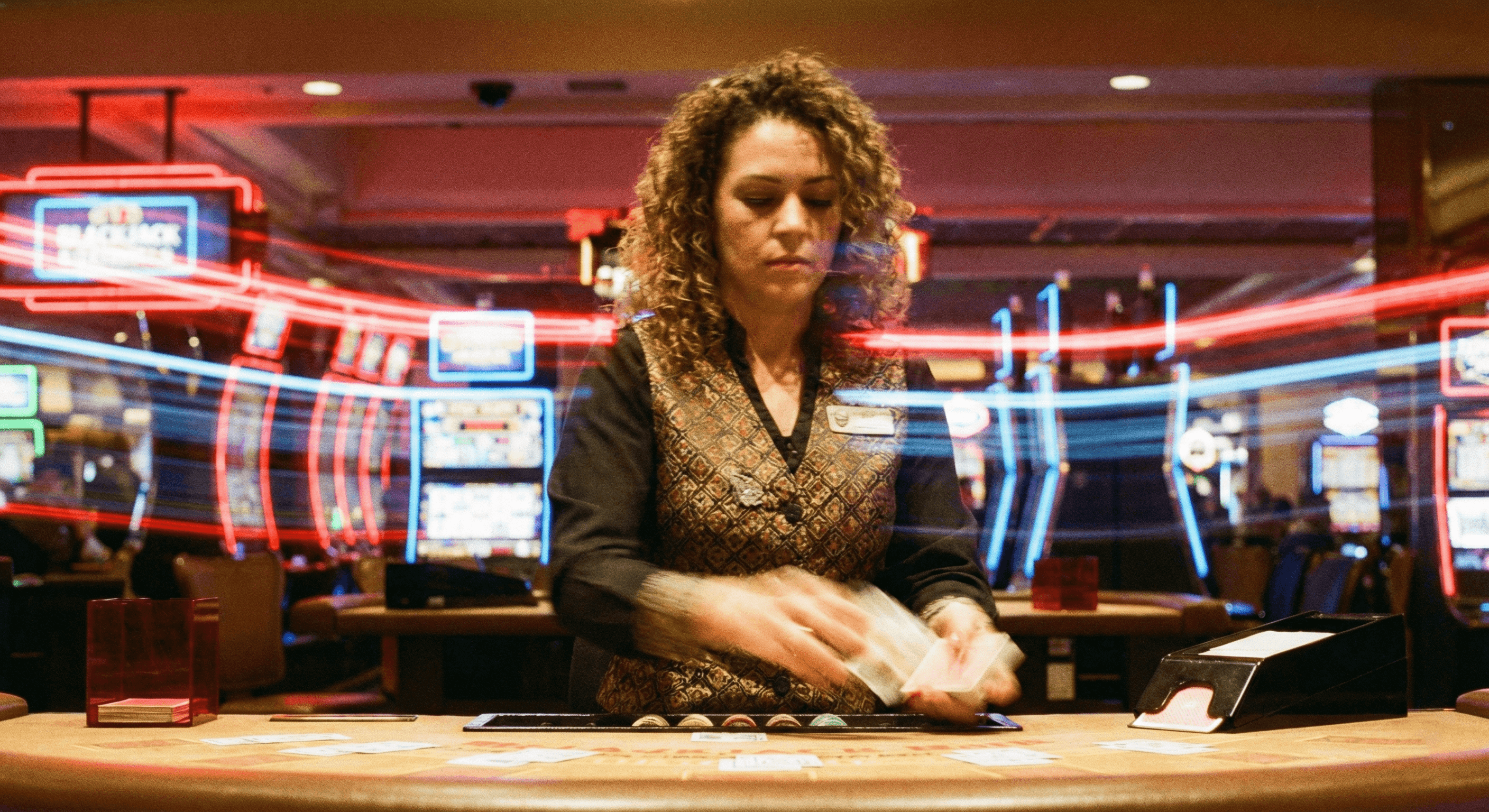
A blackjack table settles a hand every fifty seconds or so. Chips move, cards turn, a payout gets counted out and pushed across the felt, and the next hand is already being dealt. Over an eight-hour shift that can amount to 1,000+ small financial transactions per table, each one final, most of them correct, a few of them not.
The pit and the surveillance room exist to reconcile that flow. The catch is that live observation is a one-take medium. An error or nimble-fingered cheat has to be caught before the cards are cleared and the next hand is dealt. After that, the evidence of what went wrong is gone and the loss is booked. This is the part of the floor where the margin is thinnest and the clock is least forgiving.
The house always wins... in an ideal state.
Table games have to be, well, games. Meaning, they need to be sporting, with just slim advantages given to the house, ranging from roughly half a percentage point to a few percentage points for casinos' most popular table games. That's why occasional errors or past-postings are so impactful. Just one every couple of hundred hands can negate the house advantage.
The loss on a table is rarely one dramatic scam. It is the sum of small, ordinary events that each cost a little and happen a lot: a dealer pays a hand that lost, or fails to collect a losing bet, or pays the wrong odds on a side bet, or a player adds a chip to a winning wager after the outcome is known. Individually these are rounding errors. Across every table, every shift, every day, they add up to a real number.
There are a couple of things that make these events hard to catch. The first is speed. Incidents are fast and occur without much visual cueing for a surveillance operator or pit boss to catch from the corner of their eyes. The second is what's known as vigilance decrement. What is vigilance decrement, you might ask? The gist: it's the science behind why spotting table games errors and cheating becomes harder for surveillance operators the more screens they have to monitor and the longer their shift goes.
Surveillance Vision AI's attention does not fatigue, however, and it does not blink between hands. That is the whole proposition. It does not replace the people. It watches every table at once so the people can act on what matters.
Does casino surveillance AI replace my team?
No. It is worth answering the biggest objection first, because it is the one that may concern surveillance operators.
Table games surveillance AI like EagleSight's does not run the floor and it does not make the call. It watches the feeds, and when it sees something in one of the categories below, it raises an alert with the pertinent feed recording linked, the frames where the dealer's and player's cards are visible, so an operator can confirm in seconds instead of scrubbing footage. The judgment stays human.
What changes is where the operator's attention gets spent: less time hunting for the incident, more time adjudicating it. A team that could realistically watch a handful of tables closely can now be pointed at the tables where something actually happened.
What does EagleSight detect?
The detection taxonomy is the useful way to understand the product, because it maps to how a surveillance team already thinks about the floor. Here's what EagleSight detects:
Cheating. The classic table moves, identified in real time: past posting (adding to a bet after the outcome), bet capping (topping a winning wager), and pinching (pulling chips off a losing one). These events are extremely hard to catch live, because they are designed to look like normal hand motion at normal speed.
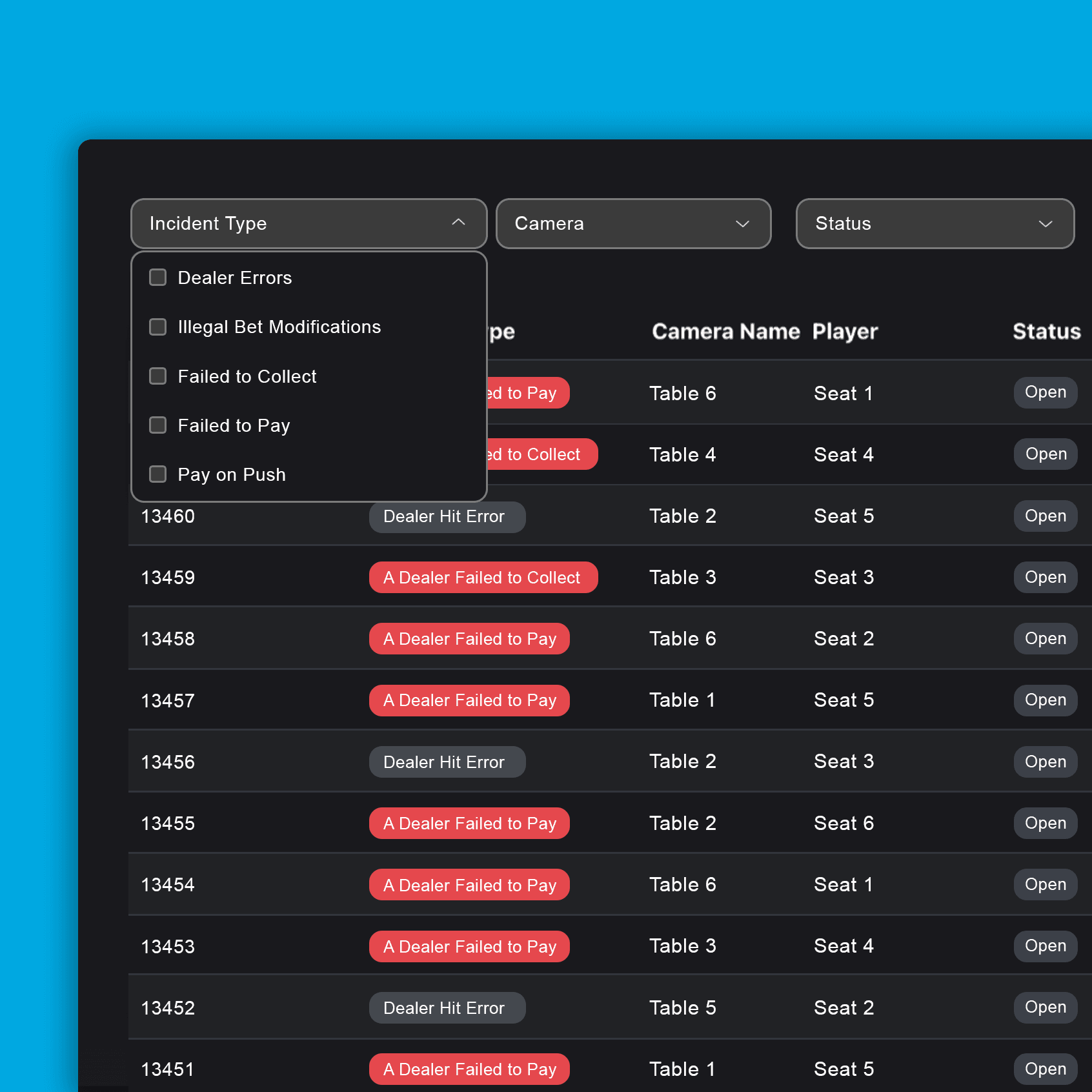
Dealer errors. The larger and less-noticed category, caught the instant it happens: pay on push, fail to collect, fail to pay, paid a loser, and procedural errors. None of these is malicious. All of them cost money, and because they are honest mistakes at pace, they are exactly the events a busy pit is least likely to notice.
Suspicious behavior. Not every anomaly is a named offense. Pattern recognition flags unusual activity that does not fit an obvious category but warrants a human look, the sort of thing an experienced operator would flag on a hunch, surfaced so the hunch is not the only line of defense.
Behavioral incidents. Safety and security concerns, flagged for a rapid response from the security team rather than the surveillance analyst. The same cameras that watch the game watch the people around it.
Performance analytics. The platform does more than just detect incidents. Table utilization rates, pace of play, and dealer efficiency data come out of the same feeds, turning the surveillance layer into an operations instrument as well as a security one, both powered by AI video analytics.
Side bet analytics. Side bet utilization and participation patterns, broken out on their own, because side bets are where a lot of table margin lives and where the added complexity makes mispays easier to make.
The first four categories are about catching what goes wrong. The last two are about understanding how the floor actually runs. Both come from watching the same video: one Vision AI layer on feeds you already have, doing several jobs at once.
How does a casino surveillance team use it day to day?
Three capabilities carry the daily workflow.
The first is real-time monitoring across multiple camera feeds at once. A single operator cannot give sustained attention to twenty tables. Computer vision can.
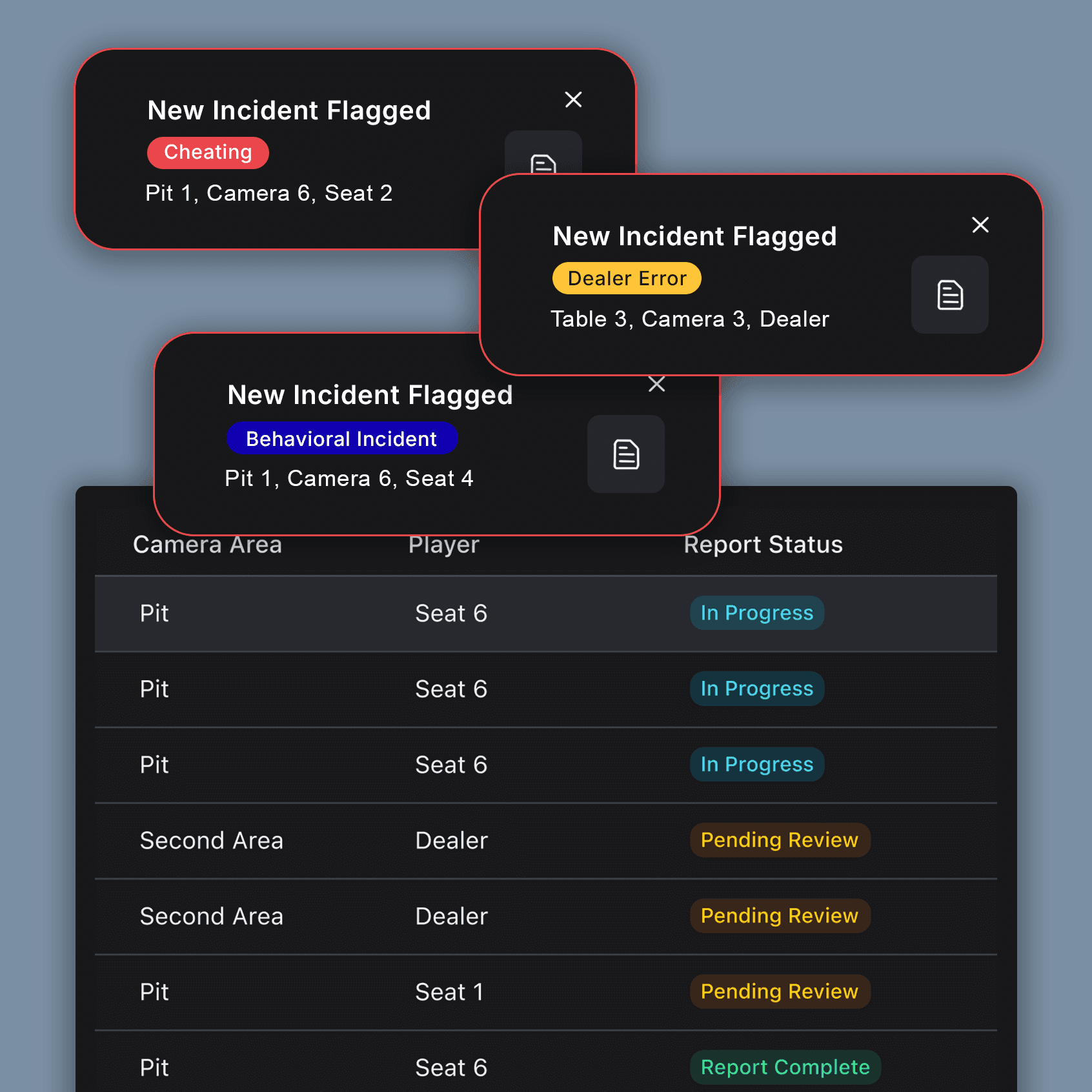
The second is the alert itself. When an incident is detected, it fires a notification to the operator with video evidence attached, the moment captured with the dealer's and player's cards visible. The difference between "go find the incident" and "here is the incident, confirm it" can make a material difference to table games protection efforts.
The third is the incident log. Everything the system flags is recorded and filterable by type, date, and table. That turns a shift's worth of alerts into something a surveillance manager can review, pattern, and hand to compliance or to the regulator, which is where casino incident reporting usually gets painful. A searchable, video-backed log is a different artifact from a handwritten pit log and a folder of exported clips.

Who is surveillance AI in casinos for?
Casino executives who care about the number at the bottom of the table games report. Historically, revenue loss due to dealer errors and cheating has been difficult to quantify. You can't count what you can't see. Vision AI now makes it possible to, not only place a number on those losses, but prevent them.
Surveillance operations get the most direct relief. The wall of monitors stops being a test of human vigilance and becomes a queue of confirmed, video-supported events to review and act on.
IT and integration teams ask the question that decides whether any of this is real: what does it touch? The answer is that it can run fully on-premise, process on site with no cloud dependency, and is compatible with existing VMS and RTSP streams. It sits on the cameras you already have - low friction casino security integration.
Marketing and analytics teams can use what the security layer produces as a byproduct: heat maps by hour, day, and week, hands and rounds per hour, pace of play. The data that tells you a table is underperforming is the same data that tells you when the floor is busy.
Vision AI helps table games meet their revenue potential
The edge on a table game is small by design. That is what makes it fun, exciting, and worth sitting down for and buying in. It's also what makes the occasional dealer error or player sleight of hand matter more than it might seem to a casual industry outsider. What Vision AI offers is not a bigger house edge. It's the ability to protect the one you have.
Frequently Asked Questions (the TLDR)
Is this casino surveillance software or a hardware system?
Software. EagleSight Table Games Surveillance is a Vision AI layer that runs on your existing table cameras and can process on-premise or on the cloud depending on your regulatory requirements. It is compatible with existing VMS and RTSP streams.
Does it use computer vision?
Yes. It applies computer vision to live camera feeds to identify events on the table in real time.
What kinds of cheating does it catch?
Maneuvers like past posting, bet capping, and pinching bets, identified in real time, along with suspicious behavior patterns that warrant a surveillance review.
Does it catch dealer mistakes, not just cheating?
Yes, and that is much of the value. It detects and flags events like pay on push, fail to collect, fail to pay, paid a loser, and procedural errors the instant they occur.
How does it handle incident reporting?
Every flagged event is logged chronologically with video evidence and is filterable by type, date, and table, which gives surveillance and compliance a searchable, video-backed record rather than a pit log and loose clips.
How else can EagleSight support casino hotels and integrated resorts?
Our Queue Management module uses vision AI and machine learning to track lines at hotel service points in real time, monitor wait times, traffic flow, and forecasting queue length up to four hours ahead.

Billy F.
Billy F. is Business Operations & GTM Systems Lead at EagleSight.ai.