Introducing EagleSight Queue Management
Billy F.
What it is, in one line: EagleSight Queue Management is Vision AI that turns a business's existing security cameras into a real-time, predictive view of its lines, measuring how long people are waiting, where congestion is building, and what the next few hours will bring, with no additional hardware to install or friction-building customer interactions.
Lines - where everything has already gone right and yet can still go so wrong. The customer chose your store, filled the cart, and walked up to pay. The fan bought the ticket and got in line for a beer. The traveler chose your hotel, already booked the room and arrived for check-in. The decision to buy has already been made, and then the wait does its quiet damage.
And the cost of that damage is not negligible. Oracle’s Stadium of the Future survey reported that 59% of sports fans would spend more on concessions if the lines were shorter, with a max acceptable wait time of 10 minutes. Cornell’s Center for Hospitality Research Hotels found hotels lose something less recoverable: that once a US guest waits more than five minutes to check in, guest satisfaction falls by 47%. A survey of 1,800 US shoppers found 92% have experienced frustration when shopping in a store, with 86% having been annoyed at waiting for a refund and 52% angry about waiting to pay – a recipe for poor reviews with downstream revenue impact and degraded loyalty.
The cost shows up differently in each place, lost spend, a lost first impression, plain frustration, but the triggering event is the same – a wait in line that exceeded the customer’s expectations.
EagleSight monitors every line at every service point simultaneously, without looking away (immune to surveillance fatigue), determining which individuals are approaching that frustration threshold, collecting data for predictive staffing to proactively shorten lines, and predicting bottlenecks that affect revenue and loyalty. And it asks nothing of the people standing in the line.
Does the customer have to do anything? No.
Most queue management tools sold to fix lines begin by handing the customer a task. Scan this code. Interact with a kiosk to grab a number. Type in your phone number for a text. Download the app. Each is framed as convenience, but each shares the burden of managing the line onto the paying customer who wants as frictionless an experience as possible.
There is a real fatigue building around this. A great many ordinary errands now require a screen and a sign-in to do something as old as standing in a line, and for plenty of everyday places that is friction the customer never asked for. EagleSight measures the line by watching it, analyzing it with Vision AI and getting smarter with machine learning, so the intelligence lives entirely on the business side. The customer just experiences a line that moves without giving it a second thought.
What does EagleSight Queue Management actually do?
EagleSight monitors lines in real time and turns what it sees into three kinds of usable knowledge, each aimed at a different way a line costs a business money.
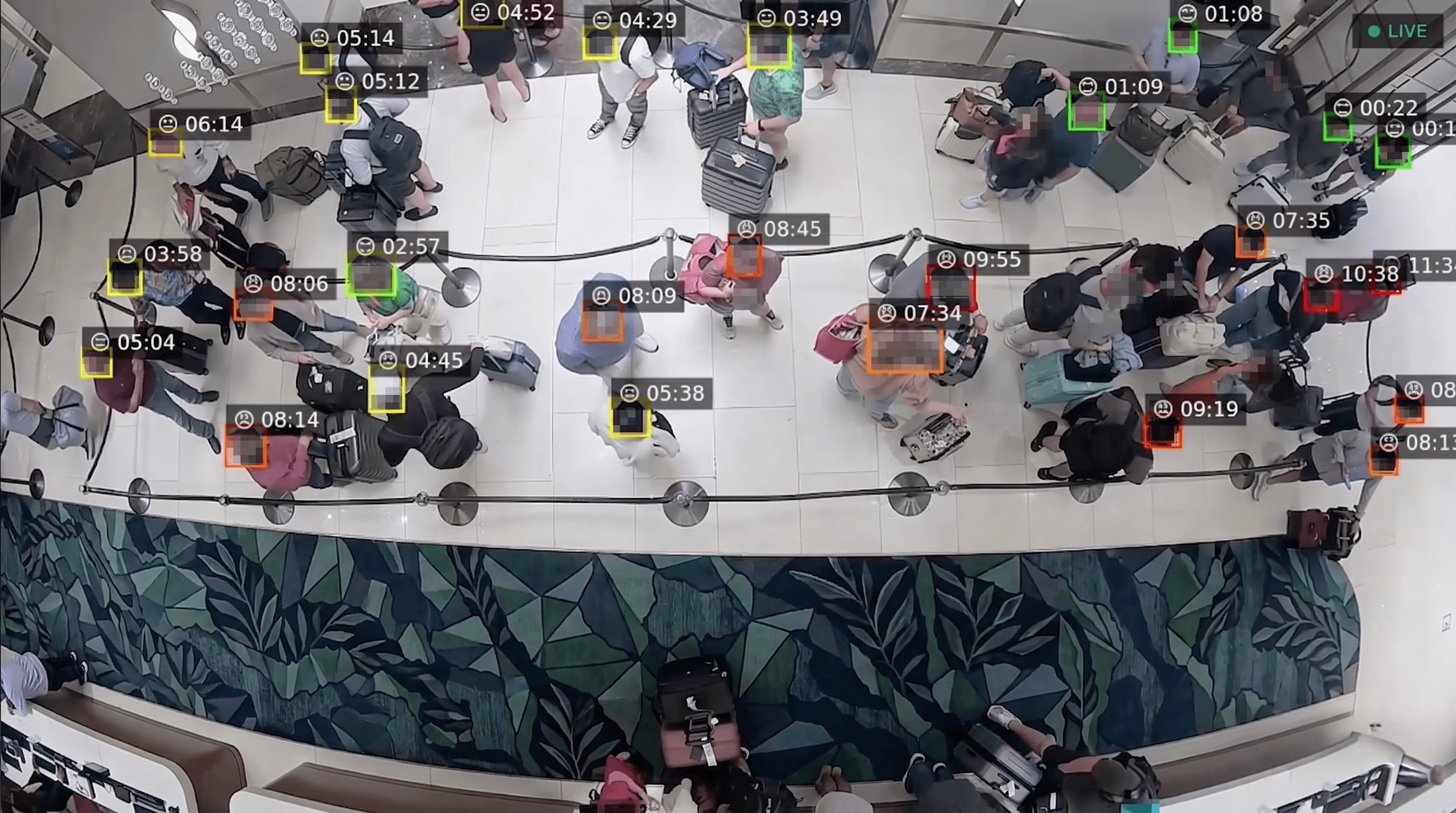
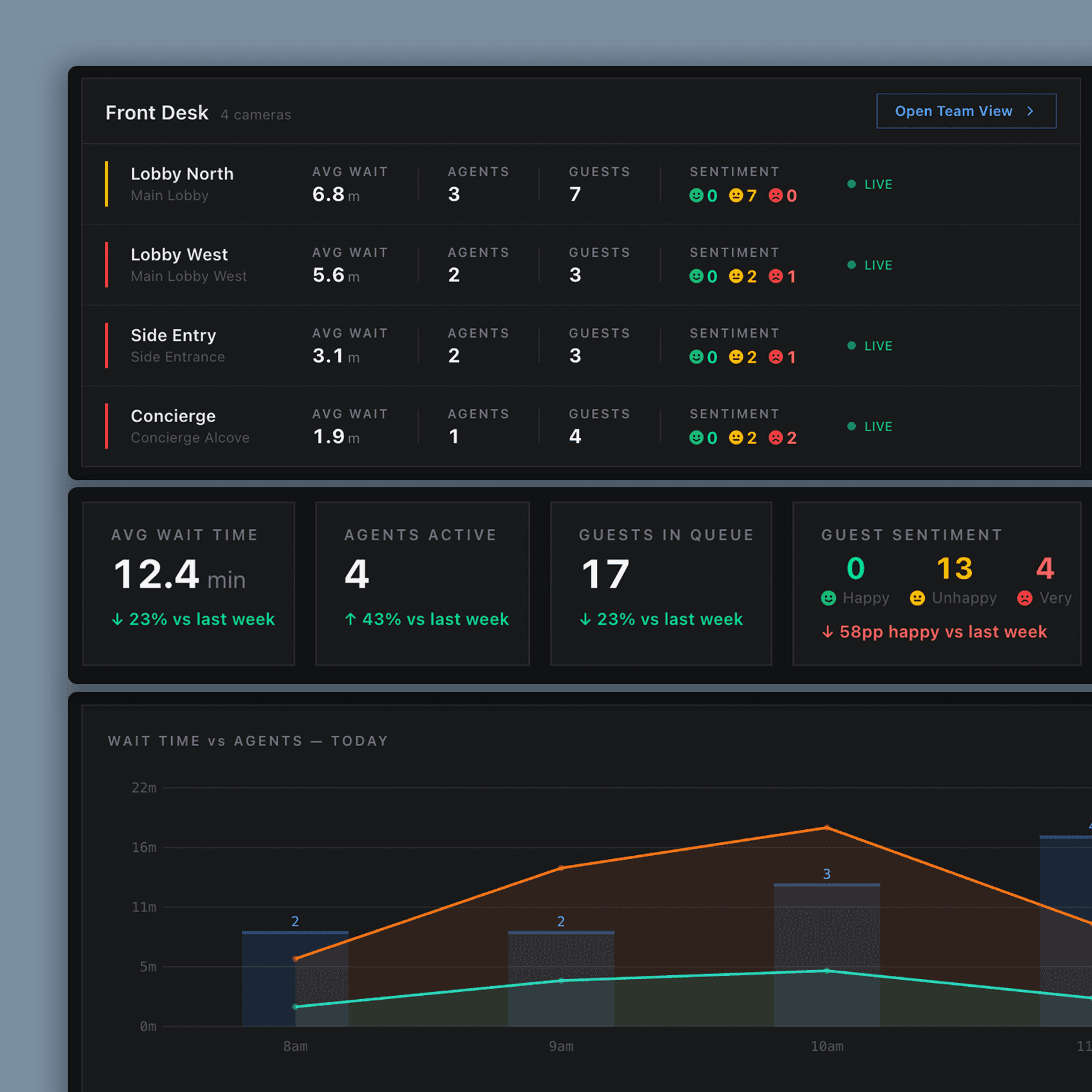
It shows the wait as it happens, including the customer the average hides. Wait times appear live, overlaid on your existing camera feeds, computed from current queue depth and observed service times rather than a generic average. That distinction matters because the average is exactly what conceals the damage. A guest who waits twenty minutes while everyone else waits five disappears into a healthy-looking average, but shows up clearly in the review, the churn, and the cost of making it right. EagleSight surfaces that outlier the moment it happens, so the team can step in at the line instead of apologizing after.
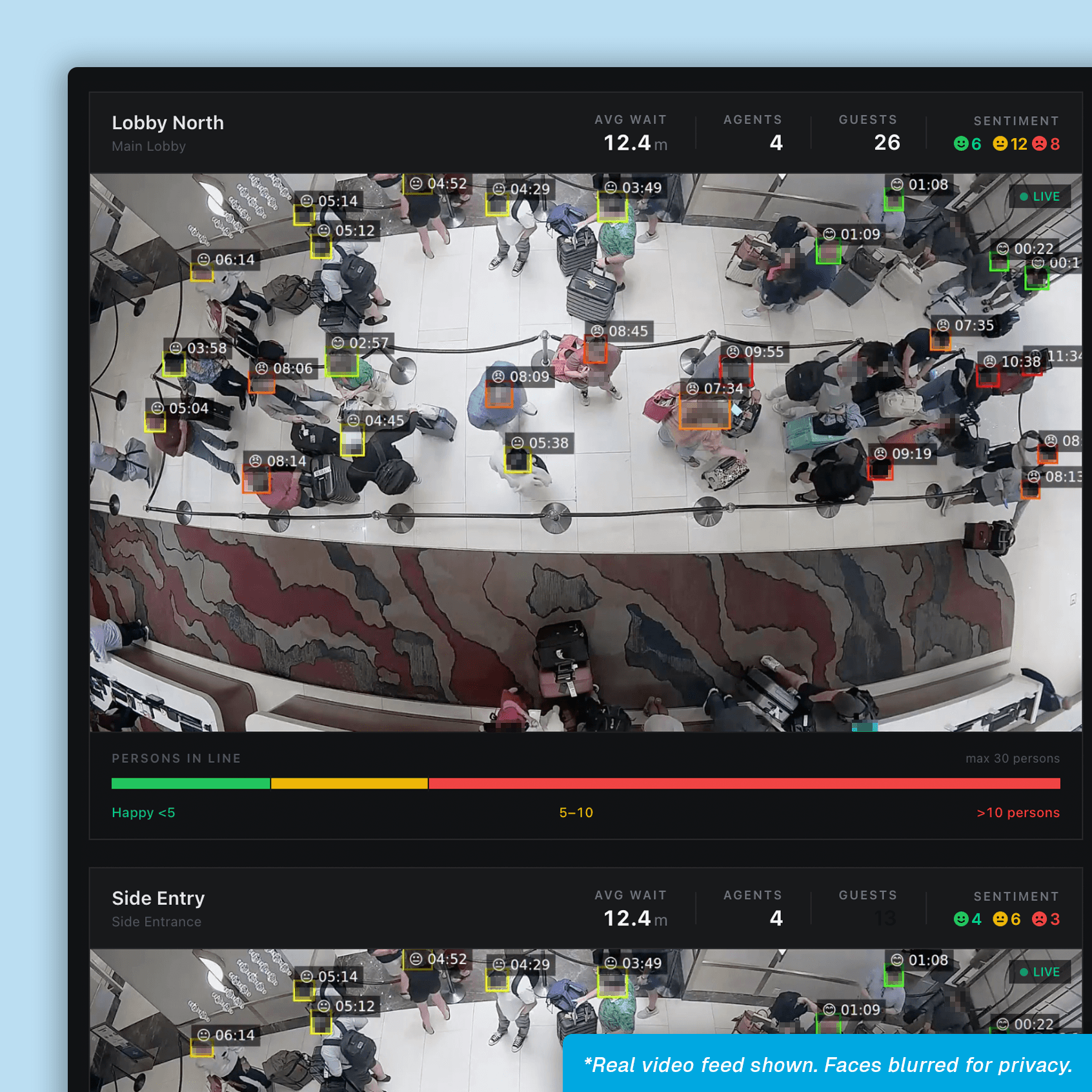
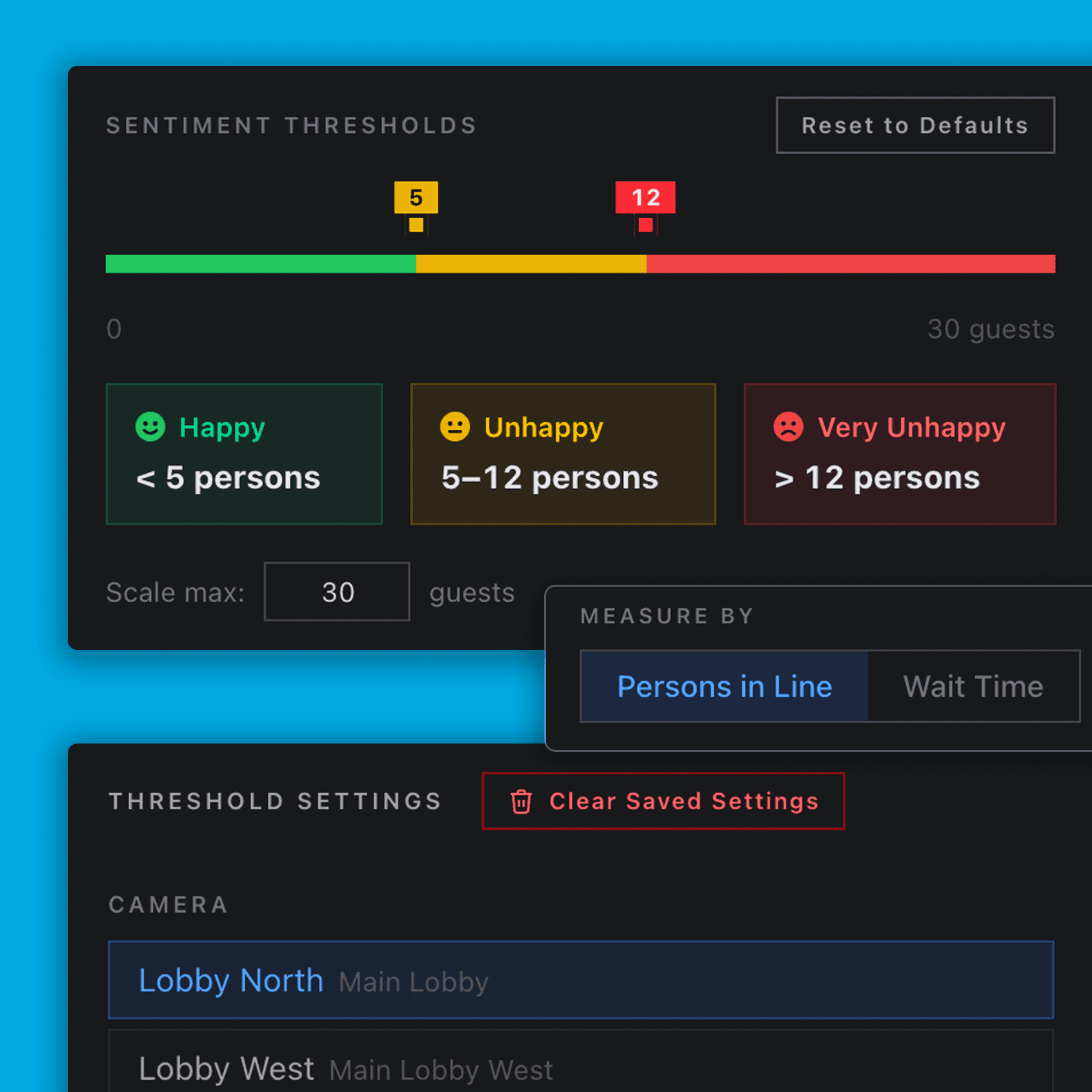
It flags a line that is breaking, the moment it breaks. When a line crosses a threshold the business defines, for length, wait, or a service-level target, the breach shows on the dashboard immediately, ranked by severity so the floor manager knows where to act first. Open another register, pull a floater to a congested counter, send someone to the front. The point is to turn the alert into action while the line is still recoverable, before the cart is abandoned or the guest gives up.
It sees the rush before it arrives and helps schedule appropriately. This is the difference between reacting and preventing. EagleSight forecasts queue length up to four hours ahead, grounded in the venue's actual arrival patterns, and recommends adding staff before the peak hits rather than after. Most operations react to a line that has already broken, which means the damage is already underway by the time anyone moves. Forecasting addresses the leak before it starts, which is the only point at which it can actually be stopped.
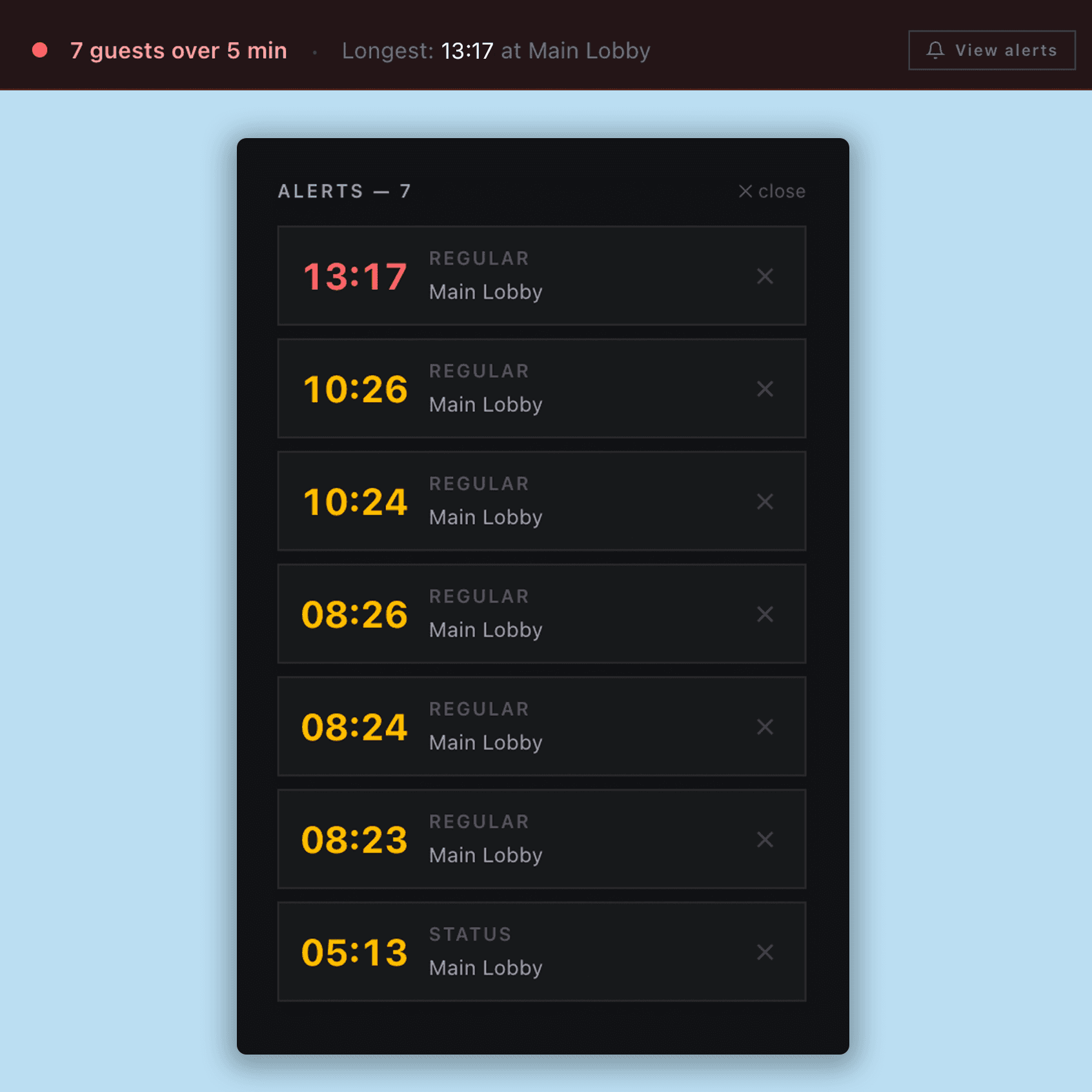
Underneath all three, EagleSight also measures the people working the line, not just the people standing in it. Service rates, time at the counter, and how each shift holds up under a surge become performance data, so an operations team can see which configurations keep waits down and which need support, grounded in what actually happened at the line rather than what got reported upward.
How does EagleSight measure wait times without tickets or an app?
EagleSight measures the line by watching it through the cameras already pointed at it. From the live video, it reads how many people are in the queue and how quickly the line is being served, and turns that into a current wait time. Because the measurement comes from the camera rather than from a check-in step, the customer never has to scan, tap, or interact with anything for the system to work. The wait time is computed from live queue depth and observed service times, not from a generic historical average, so it reflects what is actually happening at the line right now.
Who is EagleSight Queue Management for?
EagleSight Queue Management is built for high-volume places people walk into without planning their day around the visit, where the line is both costly and currently unmeasured. The specific ache is different in each one.
Grocery and retail.
The checkout line is where a won sale is most easily lost. The shopper has already chosen everything in the cart; a long wait at the register is one of the few things that can still undo the purchase entirely, and it does it at the moment of highest intent. Understaffing during a peak period quietly costs throughput, loyalty, and sales at the same time, and it tends to happen on exactly the busy afternoons when no one has a spare moment to notice the line forming.
Hotels and hospitality.
The front desk is the first thing a tired traveler meets, and first impressions at check-in are unusually durable. Beyond the Cornell finding above, an Opinion Research Corporation study found that 41% of travelers would be more likely to choose a hotel that let them skip the wait at check-in, signaling an ingrained distaste for long check-ins that can only come from experience. The dissatisfaction from a slow desk does not stay at the desk; it colors the whole stay, the review, and the odds of a return booking, long after the line itself has cleared.
Stadiums, theme parks, and large venues.
These are time-bound, and the lines sprawl everywhere at once, gates, concessions, merchandise, restrooms, so a manager cannot watch them all. Every minute a fan spends in line is a minute not spent watching the event, and it is also money left on the table. The Oracle figure above is borne out in practice: when the Atlanta Falcons cut the friction at their concession stands, Deloitte reported that fan spending across the stadium rose 16%. In a venue that lives on per-guest spend during a narrow window, the line is not just an experience problem, it is the revenue model.
Where it is not the right fit.
Some environments are genuinely built around appointments and scheduled check-ins, a clinic, a licensing office, anywhere people are expected to book ahead and a ticketing system does real work. In those places a digital queue earns its keep. EagleSight is for the walk-in world, where the best experience is the one that asks the customer for nothing.
What does it take to run EagleSight Queue Management?
EagleSight connects to standard 1080p cameras through the VMS or RTSP streams a venue already has. There are no new sensors, cameras, or kiosks to install; no rip-and-replace; and no customer-facing app or messaging system to implement. In most places the cameras already pointed at the registers, the front desk, or the concession stands are watching the exact spot where the line forms, and EagleSight leverages those existing cameras.
The short version
By the time someone reaches a line, the business has already done the hard part. EagleSight protects that last stretch, the few minutes where a good experience can still turn sour, using nothing more than the cameras already pointed at the counter. No app, no kiosk, no asking the customer to help. For an everyday business, that is exactly the right kind of invisible.
See how EagleSight Queue Management would work on your floor on the queue management page.
Frequently Asked Questions
Does EagleSight Queue Management require a customer-facing app?
No. Customers do not download an app, scan a QR code, take a number, or sign up for text messages. The system measures the line entirely through the venue's cameras, so the customer does nothing at all.
What cameras does it work with?
EagleSight works with standard 1080p cameras a business already has, connecting through existing VMS or RTSP video streams. There is no new camera hardware to install and no rip-and-replace of the existing system.
How does it calculate wait times?
Wait times are computed from live queue depth and observed service times read from the camera feed, rather than from a generic historical average. This reflects the actual wait at the line in the moment, and surfaces the outlier guest whose long wait an average would hide.
Can it predict busy periods before they happen?
Yes. EagleSight forecasts queue length up to four hours ahead based on the venue's actual arrival patterns, and recommends adding staff before a peak hits rather than after the line has already formed.
What types of businesses is it designed for?
High-volume, walk-in venues where lines form and are hard to measure: grocery and retail, hotels and hospitality, and stadiums, theme parks, and other large venues. It is generally not aimed at appointment-driven environments, such as clinics or licensing offices, where scheduled check-in systems already fit well.
How long does it take to deploy?
Setup involves connecting to existing camera streams and configuring the specific lines, thresholds, and service-level targets a business wants to monitor, which happens during onboarding while normal operations continue.

Billy F.
Billy F. is Business Operations & GTM Systems Lead at EagleSight.ai.